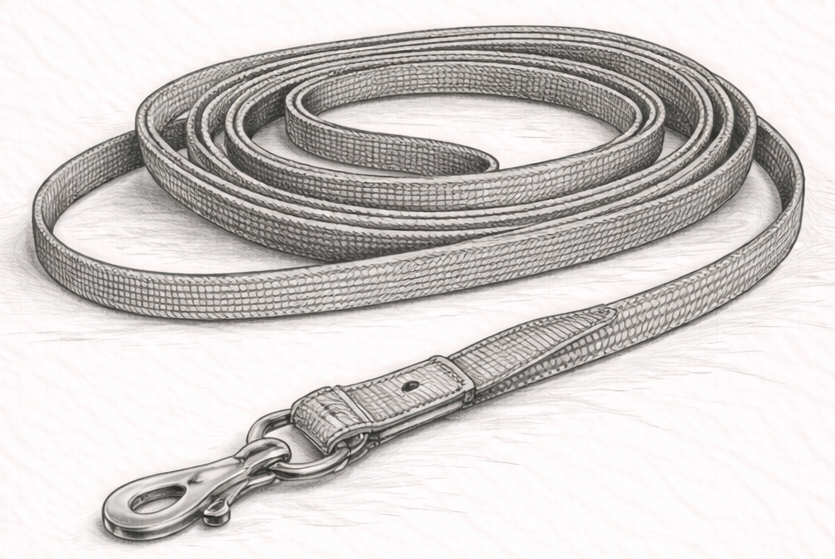
Anger With a Long Leash
From the pages of When the Room Empties
I don’t have a problem with anger.
That’s the first thing to say, because it’s also what people get wrong. I don’t fear it. I don’t deny it. I don’t pretend it isn’t there. Anger arrives quickly for me, cleanly, without much confusion. It’s sharp. Specific. It knows exactly what it’s responding to.
That’s not the problem. The problem is that I trust it, and don’t trust what would happen if it spoke freely. My anger isn’t explosive. It doesn’t build and burst. It doesn’t look for targets. It’s more like a blade: precise, directional, uninterested in collateral damage.
When something feels unjust, dishonest, or quietly predatory, anger shows up as clarity. It cuts through noise. It names what’s happening before anyone else is ready to. That’s why it unsettles me. Because clarity without restraint is rarely welcome.
I learned early that anger, no matter how accurate, is interpreted as a character flaw before it’s considered as information. Once you’re marked as angry, everything else you say gets filtered through that lens.
Motive gets questioned. Credibility erodes. Tone becomes the focus instead of content.
So I didn’t get rid of anger. I leashed it. I trained it to walk beside me instead of ahead of me. To sit when told. To wait. To let other emotions speak first, reason, patience, concern, even when anger was the most honest response in the room.
This wasn’t suppression. It was strategy.
Anger is useful, but only if it doesn’t cost you access. Only if it doesn’t destabilise the ground you’re standing on. Only if it arrives dressed as something else.
So I let it sharpen my thinking, not my voice. Inform my decisions, not announce them. I use it internally, where it can do its work without being misinterpreted. From the outside, this looks like composure. From the inside, it’s containment under tension. There’s a constant negotiation happening. Anger pulls forward, say it, stop this, draw the line now. Another part pulls back, not yet, not like this, not in this room. The leash tightens. The impulse stays.
Over time, you get very good at this. You feel anger rise and redirect it almost instantly. You slow your breathing, soften your face, lower your voice, choose words that won’t betray the heat underneath them. You sound calm while your body is fully alert, keyed up, ready.
This is where things become costly, not externally, but internally. Anger that never completes its arc doesn’t disappear. It stays active. Vigilant. It keeps scanning for threats because it was never allowed to finish the job. The more often this happens, the more effort it takes to keep it contained.
You tell yourself this is maturity. That restraint is strength. That reacting less is evidence of growth. And again, that’s true, up to a point. But when anger is always restrained, it starts to harden. Not into rage. Into vigilance. You become quicker to notice violations, slower to trust repair. You don’t blow up, you tighten. You don’t lash out, you withdraw internally. You keep doing the right thing, saying the reasonable thing, while something inside you keeps a ledger you pretend not to read.
That ledger doesn’t make you cruel. It makes you tired.
The hardest part is that no one sees this as anger. They see you as controlled. Reasonable. Fair. They praise your restraint without understanding what it costs to maintain it. They don’t realise your calm is underwritten by constant inhibition.
So you start to doubt the anger itself. You ask whether it’s justified. Whether you’re overreacting internally even if you’re not externally. Whether the sharpness you feel is insight or something less acceptable. And because you care about not doing harm, you usually give others the benefit of the doubt before you give it to yourself.
This creates a quiet asymmetry. You trust your anger enough to listen to it. You don’t trust it enough to honour it. And that gap is corrosive. Because anger, when it’s accurate, wants acknowledgement. Not indulgence. Not expression for its own sake. Just recognition that something matters. That a line exists. That a boundary was crossed.
When it doesn’t get that, it keeps working. It keeps signalling. It keeps tightening the leash from the inside. Eventually, the leash itself becomes the burden. You start to feel keyed up in situations that shouldn’t require it. A background readiness that never switches off. You’re not volatile, you’re charged. And holding that charge without release takes energy you don’t get back.
This is why people who manage anger well often don’t feel peaceful. They feel contained. Compressed. Alert in ways that don’t resolve. I don’t write this to argue for unleashing anger. That would be irresponsible. Power without discernment is just harm with better intentions. But endless restraint disguised as virtue isn’t the answer either.
Anger is not the enemy. Unacknowledged anger is. And when you leash something long enough, you forget what it feels like to let it move naturally, not to attack, not to dominate, but to finish speaking.
This is the part I’m still learning. Not how to control anger. I’ve mastered that. How to recognise when restraint has stopped being wisdom and started being fear. How to tell the difference between choosing calm and defaulting to silence. How to let anger inform boundaries instead of only\ sharpening vigilance.
Because carrying anger responsibly shouldn’t require carrying it alone.
If you recognise yourself in the person who never explodes, never loses control, but feels perpetually braced, this isn’t a confession. It’s a naming. Of a strength that learned to turn inward. Of a leash that kept things safe.
And of the quiet cost of holding it, day after day, without ever letting it go slack.